En

 Download ParkUsher Free
Imagine you’re trying to find parking downtown. You circle the block once. Twice. You’re not even sure if there are accessible spots nearby or where they’re located. Finally, you find a spot, but the sign is hard to interpret. You get out of your car and stare at the sign for a while. You walk back to your car, second-guessing yourself: “Is this actually legal for me to park here?” Through squinted eyes, you decide to risk it.
Now imagine going through this daily struggle while having chronic pain or mobility issues. This is the reality for over 15 million drivers in the US and Canada, roughly 5% of license holders.
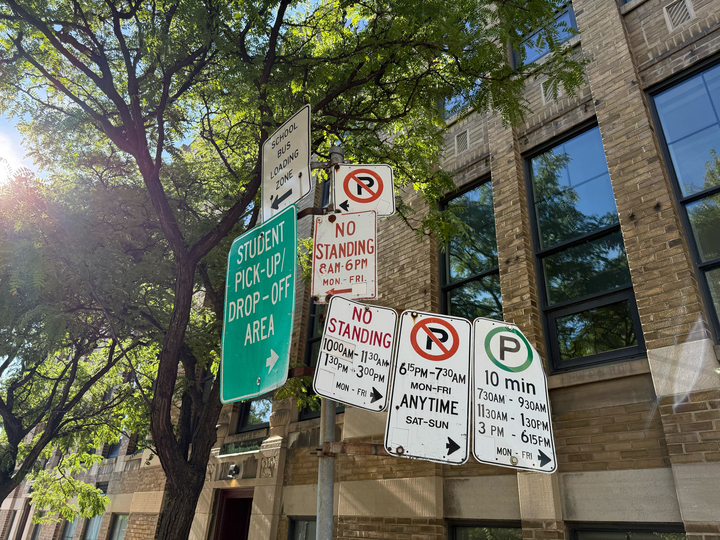
Most people think the challenge is simply “getting a closer parking spot.” The real problem is deeper. Many drivers don’t know where accessible parking is located, or whether a specific area even has it. On top of that, there is a mountain of confusing regulations, time limits, and rules that vary by city. The maze of uncertainty is topped with expensive tickets that punish indiscriminately.
When we first launched ParkUsher, our mission was to make people’s lives easier. More than that, we wanted to build a powerful tool for people with mobility challenges.
With accessibility as our northern star, we focused on solving the problem at its root: giving drivers clarity before they arrive. The goal? To show exactly where accessible parking is located and provide a complete summary of the regulations that apply to it, all through an interactive map. Everything is in the palm of their hands.
This culminated in the accessibility feature built directly into ParkUsher.
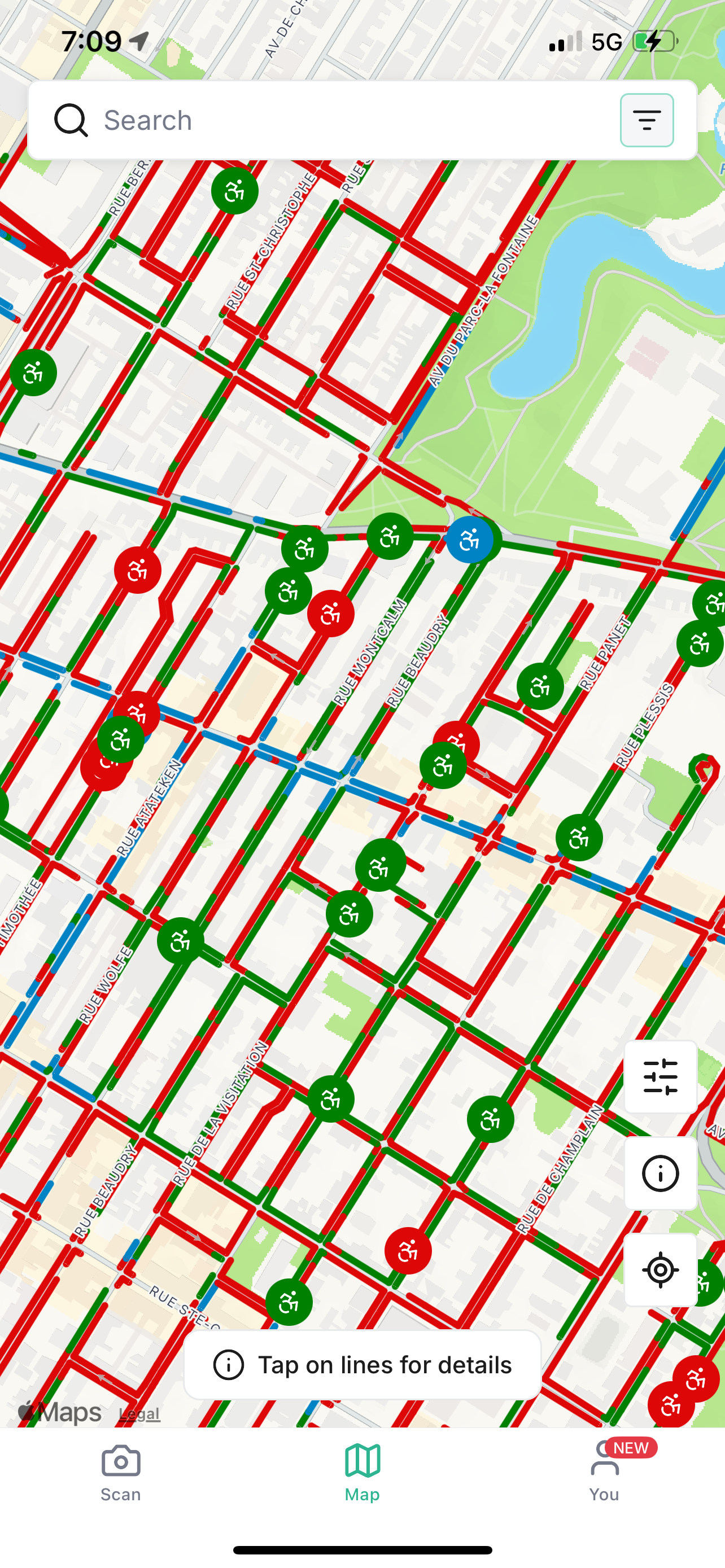
The map usually shows illegal parking as red lines and legal parking as green. But disabled parking permit holders follow different rules, and many areas include spots reserved specifically for them.
%20(1).gif)
ParkUsher tailors the map for these users, clearly marking accessible zones with the accessibility chair symbol so they know where they can park before they arrive. Instead of guessing whether a street might have accessible parking, they can see it instantly.
When users download the app, they are asked whether they have a disabled parking pass, and the map automatically adjusts to show their tailored view. If they want to update this information later, they can change their permit status in their profile at any time.
When we launch in a new city, accessibility is the first feature we implement. It is fully available in the following cities:
So whether you are in the Plateau du Montreal, Back Bay Boston, or Little Italy Toronto, you can open ParkUsher and immediately see where accessible parking is available around you.
We’re not just helping users understand parking regulations; we’re helping them locate accessible parking in advance and park with confidence.
Users can check availability before leaving home. They save time when movement is difficult. They reduce unnecessary driving. And they no longer have to stress about guessing whether a spot is legal for them.
By removing uncertainty, we reduce the mental load of parking, allowing them to focus their energy on more important things.
Some might ask: why focus so much on 5% of drivers?
Because designing for the 5% improves the experience for everyone.
Curb cuts were originally designed for wheelchair access, but today parents with strollers, travelers with suitcases, delivery workers with dollies, kids on bikes, and countless others use them without even thinking. They were built for a minority and improved life for everyone.
We’re building for the people most impacted by parking challenges, and in doing so, we reduce travel time, confusion, and stress for everyone else. Our philosophy is simple: if our app works for the drivers who can least afford uncertainty, it will work effortlessly for everyone else.
By building accessibility into the foundation of our map, we’ve built a smarter, clearer parking experience for all.
So if you or someone you know uses an accessibility permit, ParkUsher was built for you.